
Our Technology
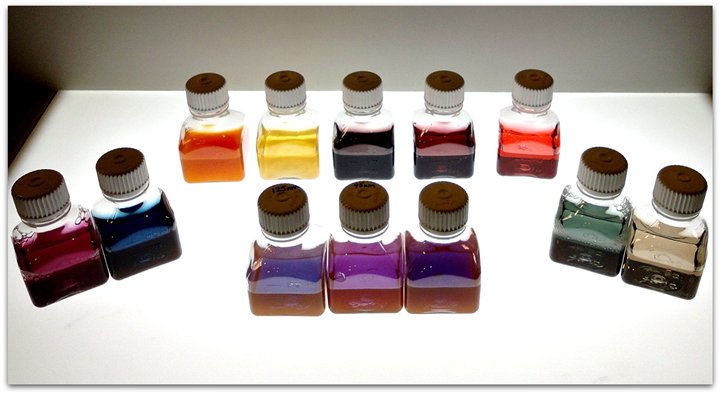
Gold nanoparticles are one of the most widely used classes of nanomaterials for chemical, bioanalytical, biomedical, optical and nanotechnological applications. While there are numerous methods known for the synthesis of gold nanoparticles, the ability to control the size, shape and monodispersity for gold nanoparticles is one of the important areas in which few standard protocols have been established to allow preparation of gold nanoparticles of desired sizes, shapes and monodispersity in a systematic way. Such ability is critical for many applications.
Spherical Gold Nanoparticles
We have developed proprietary techniques which can form any desired size in the range of 0.9-1500 nm diameters. The result is a gold nanoparticle that when compared with other conventional citrate capped nanoparticles, have better stability, wider size options, have better size and shape monodispersity, reduced batch to batch variation, and improved reactivity.
Gold Nanorods
The limitation on commercializing gold nanorods has always been monodispersity and scaling. Up until now, nanorod production has been limited to volumes of less than 100 ml. To overcome this limitation, we have exclusively licensed rights to patented technology. This technology combined with our in-house proprietary methods result in gram-scale synthesis of well-defined gold nanorods with a near-quantitative yield with SPRs from 550nm to 2100nm. This means we can manufacture 5-10 liter batches of nanorods that are highly monodisperse in size, shape, and reactivity. Further, the production methods allow for tuning of the nanorods to the desired absorbance peak.
Microgold
The first gold nanoparticle that can be seen in white light microscopy. These nanoparticles are approximately 1 micron in size, and can be conjugated to carboxyl, amines, neutravidin, and custom antibodies. Consequently, for in vitro imaging this particle replaces the old technology of silver growth enhancement of small gold nanoparticles. One step, tagging, no enhancement is necessary.
Further, we offer a 2 micron x 500nm size which matches the size of bacteria for use as an analog.
Gold Nanowires
Trying to extend nanorod technology to work for nanowires has been historically unsuccessful. We have developed proprietary methods that will allow us to grow any length nanowire, from 1 to 40 microns.
Other Shapes
Gold Nanostars, gold nanoplates, gold nanocubes, hollow gold nanoshells, and gold nanobipyramids.
Other Materials
We now offer carbon, magnetic, and other nanoparticle materials. More recently we've added alloys, including gold/silver, gold/copper, and other alloy materias.
Kits
Kits of conjugations, purifications, and more.
Polymers
Probably the least appreciated and most challenging part of our developments. As opposed to traditional approaches to PEGylation, Nanopartz has developed a proprietary method of generating a high-density hydrophilic cage of polymers on gold nanoparticles, providing an ultra-stable nanoparticle platform for in vitro, in vivo, and many non-life science applications. Each family of products, our in vivo nanorods, our in vitro spheres, and our organic nanoparticles all have different formulations optimized for that specific application.
For our organic systems, we have developed an extremely innovative polymer scheme that provides the longest lifetimes in the harshest solvent - and at the highest temperatures - in the industry.